
Most Runs in Test Cricket History (2025) | Top 10 Run Scorers
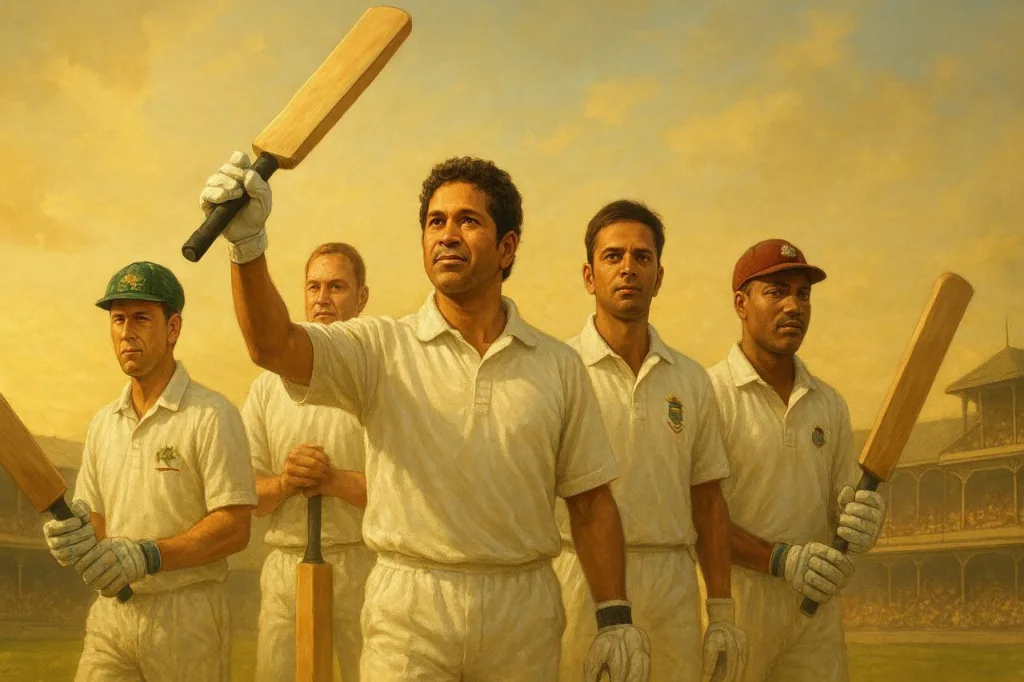
Most Runs in Test Cricket History (2025) | Top 10 Run Scorers Test cricket remains the truest examination of skill, concentration, and mental strength. Scoring runs in this format takes patience, precision, and consistency over many years. Among thousands of cricketers, only a few have crossed the 10,000-run mark in Tests. These names are not just record holders — they are the foundation of cricketing greatness. This article explores the legends with the most runs in Test cricket, their achievements, and what made them icons of the game. What Does ‘Most Runs in Test Cricket’ Mean? The term represents the total number of runs scored by a batsman across all Test matches in his career. It reflects not just talent but endurance — the ability to adapt to changing conditions and eras. From turning pitches in India to seaming tracks in England, every great batsman has battled different challenges. Those who consistently succeeded became immortal in the world of cricket. Top 10 Players with the Most Runs in Test Cricket (Updated 2025) These ten names define consistency and brilliance across generations. Analysis: The Greats Who Made History Sachin Tendulkar leads the list with 15,921 runs — a record untouched for more than a decade. His ability to dominate both pace and spin across eras made him the ultimate benchmark. Ricky Ponting, Australia’s fiercest competitor, followed closely with 13,378 runs. His aggressive yet calculated style defined the golden Australian era. Jacques Kallis was the definition of balance — a batsman and bowler of equal excellence. His batting average of 55.37 shows his unmatched consistency in all conditions. Rahul Dravid, known as “The Wall,” symbolised patience and control. He often rescued India in tough situations, facing over 31,000 deliveries in his Test career. And then came Brian Lara, the artist of elegance. His 400* against England remains the highest individual score in Test history — a record that may never fall. Indian Players Dominating the Test Run Charts India has produced several of the finest batsmen in Test history. Their success has shaped India’s rise from challenger to world leader in the format. Most Runs in Test by Country India: Sachin Tendulkar – 15,921 runs (1989–2013) England: Joe Root – 13,543 runs (2012-2025) Australia: Ricky Ponting – 13,378 runs (1995–2012) South Africa: Jacques Kallis – 13,289 runs (1995–2013) Sri Lanka: Kumar Sangakkara – 12,400 runs (2000–2015) West Indies: Brian Lara – 11,953 runs (1990–2006) Pakistan: Younis Khan – 10,099 runs (2000–2017) Each country’s leading batsman represents its cricketing spirit — from Tendulkar’s discipline to Lara’s flair. Modern Era Batsmen Chasing History (2025 Update) The new generation continues the legacy. Players like Joe Root, Steve Smith, and Kane Williamson remain the backbone of their teams. As of 2025, Root leads the active charts with over 13,543 runs, followed by Smith with 10.477+. Both still have years ahead to challenge the all-time greats. Among them, Root looks most likely to surpass 15,000 runs by 2027 if fitness and form remain intact. Interesting Facts About Test Run Scorers Only 15 players have scored more than 10,000 Test runs. Kallis is the only all-rounder among the top 10 run-getters. Dravid holds the record for most balls faced in Test history (31,258). Sangakkara’s average of 57.40 is the highest among the top scorers. Tendulkar scored at least one century every year from 1989 to 2013. Conclusion: The Timelessness of Test Batting The journey from W.G. Grace’s era to Tendulkar’s dominance defines the soul of Test cricket. Every run in this format carries weight, history, and pride. These players didn’t just collect numbers — they shaped the narrative of cricket. Even in today’s fast-paced world, Test cricket remains the ultimate challenge for a batsman. As Root, Kohli, and Smith chase history, one thing is certain — the art of scoring big in Tests will always define cricketing greatness.
Godfather of Cricket – Who is the Real Legend of the Game?
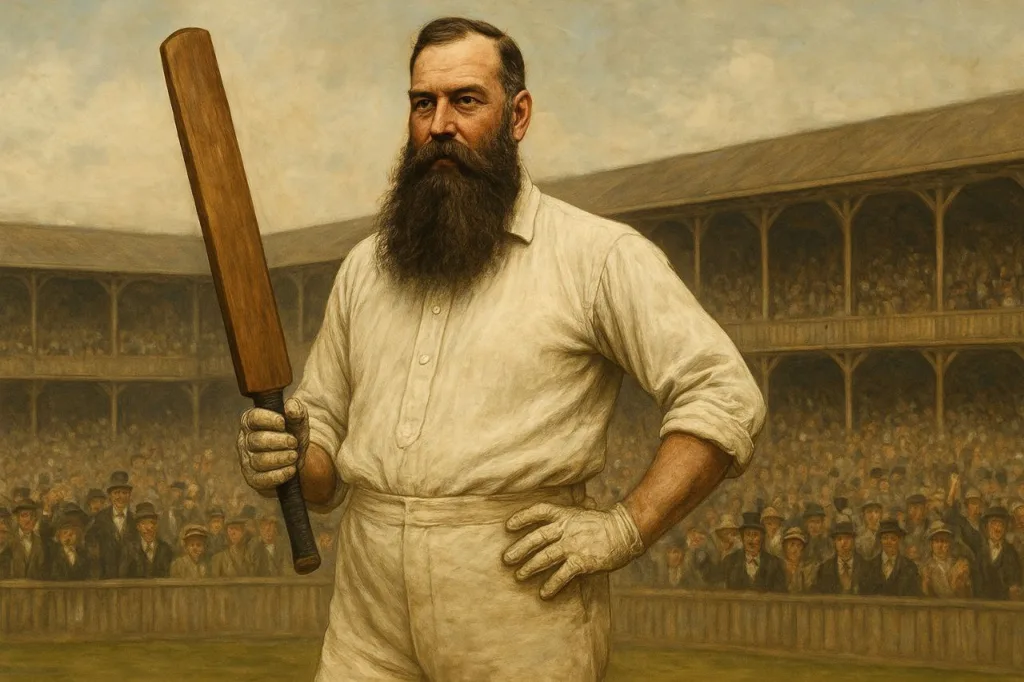
Godfather of Cricket – Who is the Real Legend of the Game? Cricket has given the world countless legends, but only a few shaped the game at its roots. Among them stands a man whose legacy continues to define cricket’s identity. Fans often ask, “Who is the Godfather of Cricket?” The answer takes us back to the 19th century, to a larger-than-life figure—W.G. Grace. This article explores his biography, career, and why he holds the timeless title of the Godfather of Cricket. Origin of the Title “Godfather of Cricket” The phrase “Godfather of Cricket” is not an official award. Instead, it is an honorary title given to the player who built the sport’s foundation. Cricket in the early 1800s was far from the professional, global game we see today. Rules were incomplete, pitches were uneven, and the sport lacked mass popularity. It was during this period that W.G. Grace emerged. His dominance with bat and ball transformed cricket into a recognised sport, one loved by fans and respected by players. The term Godfather of Cricket belongs to him because he set the standards that shaped modern cricket. Who is the Godfather of Cricket? The Godfather of Cricket is William Gilbert Grace, famously known as W.G. Grace. Born on 18 July 1848 in Gloucestershire, England, Grace came from a cricketing family. His brothers E.M. Grace and Fred Grace also played at the highest level, but none matched W.G.’s impact. Grace’s cricketing journey lasted more than forty years, starting in the 1860s and continuing into the 1900s. He played for Gloucestershire, Marylebone Cricket Club (MCC), and London County, and represented England in twenty-two Test matches between 1880 and 1899. His long career allowed him to witness and influence cricket’s early growth. W.G. Grace was not just a batsman. He was an all-rounder who dominated every aspect of the game. He scored 54,211 first-class runs and took 2,809 wickets, achievements that remain astonishing given the poor conditions of pitches and equipment at the time. He also scored 126 centuries, setting the trend for future batting greats. Beyond numbers, Grace’s presence turned cricket into a true spectator sport. Crowds filled stadiums to watch him bat, newspapers published his scores with pride, and he became one of the first global sporting icons. His iconic beard, towering personality, and unique style made him unforgettable. For these reasons, cricket historians and fans worldwide call him the Godfather of Cricket. He was not only a record-breaker but also a pioneer who gave cricket its identity as a professional sport. W.G. Grace – Biography of the Godfather of Cricket William Gilbert Grace, born on 18 July 1848 in Downend, Gloucestershire, was one of the most influential figures in cricket history. He came from a family deeply involved in the sport, but his skills, leadership, and achievements placed him above the rest. He balanced his cricket career with his profession as a physician, earning respect as both a sportsman and a doctor. Grace died on 23 October 1915 in Mottingham, London, leaving behind a legacy that continues to inspire cricket lovers. Known for his long beard and commanding personality, he was one of the first sportsmen to achieve celebrity status. He played for Gloucestershire for most of his career, also representing MCC and London County, while his impact reached far beyond county boundaries. Contributions of W.G. Grace – The True Godfather W.G. Grace is remembered not only for his incredible records but also for the way he changed cricket. He introduced new techniques in batting, such as front-foot play and aggressive stroke-making, which became the foundation of modern batting. He was the first to make cricket not just a contest between players but also an entertainment for the masses. His ability to score runs under challenging conditions proved that cricket could be played with both skill and style. Grace also drew large crowds wherever he played, making cricket a popular spectator event for the first time. His leadership on the field inspired fellow players and set an example of how professionalism could exist within a gentleman’s game. He was instrumental in raising the standard of competitions, which pushed cricket boards to organise tournaments in a structured format. W.G. Grace Career Highlights W.G. Grace – The Man Behind the Title Grace was more than a cricketer. He was the symbol of cricket’s rise. His presence on the field captured public imagination and gave the sport an identity. He batted in an era when conditions were unpredictable and equipment was minimal, yet he managed to dominate bowlers with confidence and style. His leadership helped Gloucestershire become one of the strongest county teams of the time. His personality also contributed to the popularity of the sport. A famous anecdote recalls him being bowled out early in an innings. Instead of leaving, he replaced the bails and told the bowler, “They came to see me bat, not you bowl.” Such moments reflect his humour and his status as cricket’s first superstar. Modern Interpretations of the Title Although W.G. Grace is universally recognised as the Godfather of Cricket, modern fans sometimes associate the title with other legends. Sir Don Bradman, with his extraordinary batting average of 99.94, is often described as the greatest batsman ever. Sachin Tendulkar, adored worldwide, is widely called the “God of Cricket.” In some regions, passionate fans even use the term Godfather to describe their local heroes. However, history remains clear. The original and true Godfather of Cricket is W.G. Grace. His achievements, influence, and pioneering role cannot be replaced by any other cricketer. Impact of the Godfather of Cricket on the Sport The legacy of W.G. Grace goes far beyond statistics. He changed the way cricket was played, watched, and celebrated. His batting inspired future generations, including legends like Don Bradman, Viv Richards, and Sachin Tendulkar. His presence on the field brought cricket into the hearts of people and helped make it England’s national sport. Grace’s influence encouraged cricket boards to introduce more structured competitions, laying the groundwork for
Women Big Bash League 2023 – Winner, Final Highlights & Top Performers

Women Big Bash League 2023 – Winner, Final Highlights & Top Performers The Women Big Bash League 2023 (WBBL 2023) was one of the most exciting seasons in women’s cricket history. Featuring world-class players, thrilling finishes, and record-breaking performances, it captured the attention of cricket fans worldwide. From spectacular batting displays to fiery bowling spells, the tournament had it all. This edition not only entertained but also reinforced the importance of women’s franchise cricket. History of the Women’s Big Bash League The WBBL began in 2015 as a platform to promote women’s cricket in Australia. Over the years, it has grown into one of the premier T20 leagues in the world. Many of the world’s top women cricketers, including Meg Lanning, Ellyse Perry, Sophie Devine, and Harmanpreet Kaur, have played in the tournament.The league has played a huge role in expanding the popularity of women’s cricket, inspiring a new generation of fans and players. By 2023, the WBBL had become a global spectacle with record sponsorships, increased viewership, and rising competition levels. Women Big Bash League 2023 Overview The 2023 edition ran from October to December 2023. It featured 8 teams, each representing different regions of Australia. The league followed a round-robin format with the top four advancing to the playoffs. Participating Teams – WBBL 2023 Sydney Sixers Women Sydney Thunder Women Brisbane Heat Women Adelaide Strikers Women Hobart Hurricanes Women Melbourne Renegades Women Melbourne Stars Women Perth Scorchers Women This lineup created a perfect mix of local talent and international stars, setting the stage for a thrilling season. WBBL 2023 Season Highlights The Women Big Bash League 2023 was full of drama and unforgettable cricket. Some highlights included: Adelaide Strikers’ dominance in the group stage. Close super-over finishes that kept fans glued. Explosive batting from Sophie Devine and Beth Mooney. Brilliant spin bowling from Amanda-Jade Wellington and Ashleigh Gardner. Young talents like Georgia Wareham and Annabel Sutherland are showing their class. The balance between bat and ball made every match competitive. WBBL 2023 Final Match Recap The grand final was played between Adelaide Strikers Women and Brisbane Heat Women. It was a nail-biting contest where both teams displayed grit and determination. Brisbane Heat posted a challenging total with strong batting from Grace Harris. Adelaide Strikers, led by Tahlia McGrath, chased confidently. A stunning all-round performance by Amanda-Jade Wellington turned the game in Adelaide’s favour. In the end, Adelaide Strikers Women were crowned WBBL 2023 champions, securing back-to-back titles after their 2022 triumph. Women’s Big Bash League 2023 Winner The Adelaide Strikers Women lifted the trophy, marking their second consecutive championship win. Their consistency throughout the season and ability to handle pressure in knockout matches stood out. WBBL 2023 Final Result Winner: Adelaide Strikers Women Runner-Up: Brisbane Heat Women Player of the Final: Amanda-Jade Wellington Top Scorer of the Season: Beth Mooney (Perth Scorchers) Best Bowler of the Season: Sophie Day This victory proved that Adelaide Strikers as one of the most dominant teams in WBBL history. Top Performers of WBBL 2023 Most Runs – Top 5 Batters Most Wickets – Top 5 Bowlers These performances were key in shaping the season and keeping fans hooked. Records & Stats from WBBL 2023 The 2023 edition also produced some memorable records: Highest Team Total: Brisbane Heat – 229/7 vs Hobart Hurricanes. Best Bowling Figures: Hannah Darlington – 5/10. Fastest Fifty: Tess Flintoff – 16 balls. Most Sixes: Grace Harris – 28 sixes. These records added spice to the season and showcased the quality of cricket in WBBL. Impact of WBBL 2023 on Women’s Cricket The Women’s Big Bash League 2023 had a significant impact beyond the field: Boost in grassroots participation as young girls were inspired by star cricketers. Global recognition for players from outside Australia, making WBBL an international brand. Commercial success with increased sponsorship and advertising deals. Media attention and fan engagement are reaching new heights. The tournament further closed the gap between men’s and women’s cricket in terms of excitement and viewership. Women Big Bash League 2023 Broadcast & Viewership The tournament was broadcast live on Fox Cricket and Channel Seven, while streaming was available on Kayo Sports.International fans could watch through various broadcasters and online platforms. The digital engagement was record-breaking, with millions of views on highlight reels across YouTube, Twitter, and Instagram. The fan culture around WBBL continues to grow stronger every year. Conclusion The Women Big Bash League 2023 was a season to remember. From Adelaide Strikers’ victory to the rise of new stars, it had everything cricket fans hoped for. The tournament proved that women’s cricket has the power, entertainment, and global appeal to stand tall. With strong performances, record-breaking stats, and growing fan support, WBBL continues to push boundaries in the sporting world. As we look ahead to WBBL 2024, one thing is certain – women’s cricket is only getting stronger, and the Big Bash League is at the heart of its success.
Most Wickets in a Test Match – Top Records, Stats & Bowling Legends

Most Wickets in a Test Match – Top Records, Stats & Bowling Legends Test cricket is considered the purest and most challenging form of the game. It examines every aspect of a player’s skill, patience, and endurance across five long days. While batters often dominate headlines with centuries and partnerships, bowlers hold the real power to change the direction of a match. A single spell of inspired bowling can dismantle even the strongest batting line-up. Among all bowling achievements, the record for the most wickets in a Test match stands above the rest. It represents not just skill in one innings but dominance across both innings of a game. Only a handful of bowlers have ever managed to reach the very top of this list, and their performances are remembered as some of the most extraordinary moments in cricket history. What Does “Most Wickets in a Test Match” Mean? A Test match allows bowlers two innings to dismiss the opposition. Since a team can lose ten wickets per innings, there are a maximum of twenty available wickets for bowlers to claim. Taking a large proportion of those in a single match is one of the toughest challenges in the sport. Achieving this record requires not only exceptional skill but also stamina. The conditions can change drastically from one innings to the next – from fresh pitches on day one to deteriorating surfaces on day four or five. Bowlers who hold the record for the most wickets in a Test match mastered these shifting circumstances, adjusting their lengths, variations, and strategies to remain effective throughout the contest. Historical Overview of Bowling Records Bowling has always played a central role in shaping the outcome of Test matches. In the early years of cricket, uncovered pitches offered bowlers significant assistance. Seamers and spinners often found help from the pitch, making high wicket hauls more common than today. As the game progressed, improvements in pitch preparation and batting techniques made life more difficult for bowlers. Despite these changes, certain individuals stood out across generations. From Sydney Barnes in the early 20th century to Jim Laker in the mid-1900s and Muttiah Muralitharan in the modern era, these bowlers produced spells that remain etched in cricket’s memory. Their feats show that while conditions and eras may differ, the art of wicket-taking remains timeless. Top 10 Bowlers with the Most Wickets in a Test Match The following table highlights the greatest bowling performances across both innings of a Test match. These are the bowlers who dominated from start to finish, leaving their opponents with no escape. Jim Laker’s incredible 19 wickets against Australia in 1956 remain the gold standard. No bowler has come closer than Sydney Barnes’ 17 wickets. The fact that this record has lasted nearly seventy years underlines just how rare and difficult such dominance is. Match-Winning Spells in Test History A few bowling performances have achieved legendary status because they not only broke records but also completely defined the outcome of the match. Jim Laker’s 19 wickets in the 1956 Ashes at Old Trafford is the most famous example. He took nine wickets in the first innings and followed it up with a clean sweep of all ten in the second innings. This display of off-spin mastery ensured England’s victory and cemented his place in cricketing folklore. Anil Kumble’s feat of dismissing all ten Pakistani batters in Delhi in 1999 is another moment etched into history. Although his total match haul was 14, it was his perfect innings that captured the imagination of fans worldwide. Muttiah Muralitharan also deserves mention for his 16-wicket haul at The Oval in 1998. Bowling against England in their own conditions, Muralitharan’s dominance showed that true class transcends home advantage. His variations in flight, spin, and bounce left the batters completely puzzled. These examples demonstrate that the most wickets in a Test match is more than just a statistic; it is a symbol of total control and influence over the game. The Role of Conditions in Record-Breaking Performances The conditions under which a bowler operates play a major role in whether they can achieve high wicket hauls. In the subcontinent, spinners benefit from pitches that deteriorate rapidly, offering turn and bounce. This is why spinners such as Anil Kumble and Muralitharan feature so prominently in the record books. In contrast, seamers and swing bowlers have traditionally thrived in England and New Zealand, where overhead conditions and green pitches offer movement. Fast bowlers in Australia and South Africa also find assistance from the natural bounce of pitches in those countries. Modern cricket has added another factor: technology. With the Decision Review System (DRS), bowlers now receive more accurate decisions, especially in LBW appeals. This has contributed to wicket tallies and given bowlers a better chance to be rewarded for their accuracy. Modern-Day Contenders for the Record While Jim Laker’s 19 wickets remain unmatched, the modern game still features bowlers who could, on their day, challenge high numbers. Ravichandran Ashwin has proven time and again that he can run through batting line-ups on turning tracks in India. Nathan Lyon has consistently been Australia’s most reliable spinner and has the ability to produce match-winning spells. Among pacers, Pat Cummins and Kagiso Rabada have shown they can dismantle sides with sheer pace and movement. However, achieving more than 15 or 16 wickets in the modern era is incredibly difficult. With better batting techniques, improved protective equipment, and flatter pitches designed to entertain crowds, bowlers face an uphill battle. Yet cricket has always produced unexpected heroes, and the possibility of another once-in-a-generation performance cannot be ruled out. Conclusion The record for the most wickets in a Test match is one of cricket’s most enduring and respected milestones. Jim Laker’s 19-wicket masterclass in 1956 remains untouched, serving as a reminder of just how rare complete bowling dominance is. Over the decades, bowlers like Sydney Barnes, Muttiah Muralitharan, and Anil Kumble have also delivered unforgettable performances that shaped Test cricket’s history. These records highlight that
Fastest Century in T20 Cricket – Records, Stats & Analysis (2025 Update)

Fastest Century in T20 Cricket – Records, Stats & Analysis (2025 Update) T20 cricket is all about speed and excitement. Unlike Tests or ODIs, this format gives batsmen only 120 balls to score big. That is why fast centuries in T20 have a special charm. They define explosive batting, power-hitting, and the ability to dominate any bowling attack. Over the years, fans have witnessed some breathtaking innings. Players have smashed centuries in less than 40 balls. These knocks are not just records but iconic moments in cricket history. Let’s explore the fastest century in T20 cricket across formats, leagues, and international matches. What Makes a Fast T20 Century Possible? Scoring a century in less than 40 balls is not easy. Several factors play a role: Pitch conditions: Flat pitches help batters play shots freely. Powerplay advantage: Field restrictions allow more boundaries in the first six overs. Six-hitting ability: Power hitters like Gayle, Miller, and Rohit maximise every loose ball. Bowling attack quality: Centuries often come against weaker or inexperienced bowling line-ups. Fast centuries require skill, timing, and controlled aggression. Players need courage to attack from the very first ball. Fastest Century in T20 International (T20I) The fastest T20 International century belongs to Sahil Chauhan of Estonia. He reached his hundred in just 27 balls against Cyprus in 2024. The innings was pure destruction. Sahil cleared boundaries with ease, hitting five fours and thirteen sixes. This record showed how fearless batting could change a game. Fastest Century in T20 League Matches Franchise leagues like IPL, BBL, PSL, and CPL have raised the bar in T20 cricket. Here, big hitters face quality bowlers under pressure. Yet, some innings have rewritten history. The fastest century in any T20 match belongs to Chris Gayle. Playing for Royal Challengers Bangalore in the IPL 2013, he scored a hundred in 30 balls against Pune Warriors. His final score of 175* remains the highest in T20 cricket. This knock is still regarded as the greatest T20 innings ever played. Gayle’s power-hitting forced bowlers to rethink strategies. Top 10 Fastest Centuries in T20 Cricket Fastest Century in IPL The IPL fastest century record belongs to Chris Gayle with his 30-ball hundred in 2013. That match changed IPL forever. Gayle’s innings included 17 sixes and 13 fours. Other quick hundreds in IPL came from Vaibhav Suryavanshi (35 balls), Yusuf Pathan (37 balls), and Heinrich Klaasen (37 balls). IPL has always been the hub for record-breaking centuries because of batting-friendly pitches and world-class talent. Fastest Century in T20 World Cup The T20 World Cup has seen some magical knocks. The fastest century in a T20 World Cup belongs to Chris Gayle again. He scored a hundred in 47 balls against England in 2016. On the big stage, pressure is high. Bowlers are top-class. Yet Gayle showed why he is called the “Universe Boss.” His innings set the tone for the West Indies’ successful tournament. Indian Players with Fastest T20 Centuries India has produced some explosive T20 batsmen. The fastest T20 century by an Indian in domestic cricket came from Urvil Patel. He scored a 28-ball hundred in the Syed Mushtaq Ali Trophy 2024. In T20 Internationals, Rohit Sharma holds the record. He smashed a 35-ball hundred against Sri Lanka in 2017. His timing and elegance proved that even classical players can dominate T20 cricket. Future of Fast Centuries in T20 Cricket With shorter boundaries, heavier bats, and fearless batting, the future looks exciting. Someone may break Sahil’s 27-ball record soon. Young talents like Yashasvi Jaiswal, Suryakumar Yadav, and Dewald Brevis can set new benchmarks. T20 cricket is evolving, and fans can expect more fireworks in the upcoming years. Conclusion – Legacy of the Fastest Centuries in T20 The fastest century in T20 is not just a record. It represents the fearless nature of modern cricket. Players like Chris Gayle, David Miller, and Rohit Sharma have shown how thrilling this format can be. Every fast century inspires fans and motivates young cricketers to dream bigger. The legacy of these knocks will live on forever in cricket history.
Most Centuries in ODI Cricket (2025) – Virat Kohli Leads the All-Time List
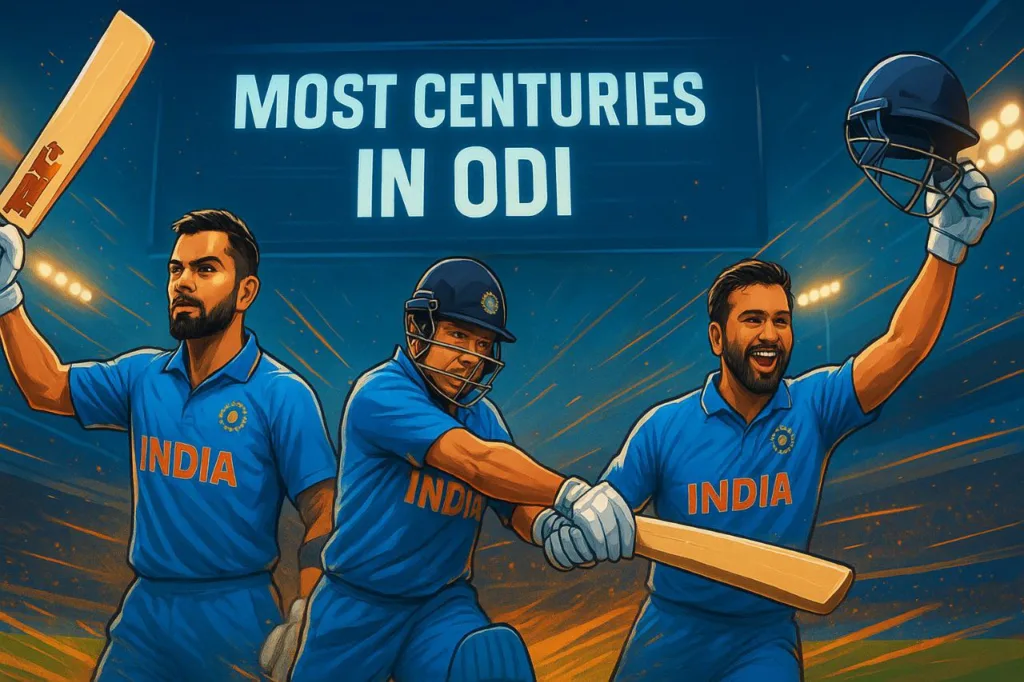
Most Centuries in ODI Cricket (2025) – Virat Kohli Leads the All-Time List One-day international cricket has always been about balance. Teams need both quick scoring and stability. In this format, centuries matter more than any other stat. A batter reaching 100 not only boosts the team’s total but also shows remarkable control under pressure. Fans remember the great knocks for years to come. From World Cup classics to chasing hundreds under lights, these innings are timeless. In this article, we focus on the most centuries in ODI and how the records look in 2025. We also compare the highest centuries in ODI by players and countries. This is not just a list of stats but also an insight into what makes these players special and why centuries define ODI cricket. Why Centuries Matter in ODI Cricket Symbol of consistency A century in ODIs reflects more than talent. It shows patience, fitness, and mental strength. Any batter can play a cameo of 30 or 40 runs, but building a hundred requires structure. The best batters learn to pace themselves, protect their wickets, and then explode later in the innings. That ability to “bat through” is rare. Match-winning impact Most ODI matches swing on the back of a single big innings. A century in the first innings often ensures a score above 300, which is a strong target. In run chases, centuries are priceless. Virat Kohli, for example, has won countless games for India while chasing. This shows that hundreds do not just look good in records—they directly change outcomes. Evolution of ODI centuries In earlier decades, ODI cricket was slower. A score of 250 was often match-winning. Today, teams expect 300–350 regularly. Batters are fitter, bats are better, and pitches are more batting-friendly. Powerplays and fielding restrictions also allow attacking play. The result is clear: the number of centuries has grown sharply over time, and they come at faster strike rates. Most Centuries in ODI – Updated List (2025) Top 10 Players with the Most Hundreds Virat Kohli – The undisputed leader Virat Kohli now stands at the very top with 51 centuries in ODIs. He crossed Sachin Tendulkar’s 49 during the 2023 World Cup and kept adding to his tally through 2024 and 2025. What separates Kohli from others is not just the number of centuries, but the circumstances in which he scores them. A large share of his hundreds have come in run chases, where the pressure is immense. His calm approach, ability to find gaps, and superb fitness allow him to rotate strike and then accelerate when needed. That makes him the most reliable batter in high-pressure situations. Sachin Tendulkar – The original master Sachin Tendulkar was the first true giant of ODI batting. He finished with 49 centuries, a record that many thought would last forever. His role was tougher than modern openers face today. He played in an era with challenging pitches, less protective gear, and stronger bowling attacks. Despite that, he dominated with flawless technique. He also carried the hopes of a cricket-loving nation for over two decades. His centuries, whether in Sharjah, Australia, or at home in India, are still remembered as defining moments of the sport. Rohit Sharma – The big scorer Rohit Sharma holds a unique place in ODI cricket. He has 32 hundreds, but his speciality is going beyond 100. He owns three ODI double centuries, an achievement unmatched by anyone else. His ability to convert starts into massive scores is his strength. When Rohit passes 50, bowlers know trouble is coming. His timing and effortless six-hitting make him one of the most dangerous ODI batters in history. Ricky Ponting – The Australian powerhouse Ricky Ponting, with 30 centuries, led Australia’s golden era. He was not just a batsman but a leader who thrived in big matches. His ability to dominate fast bowlers and play aggressively in finals set him apart. Ponting’s hundreds came in an era where ODI pitches were tougher, which makes his record even more impressive. Others in the elite club Sanath Jayasuriya revolutionised opening with fearless hitting. Hashim Amla built his centuries with elegance and control. AB de Villiers redefined ODI batting with explosive strokes, while Kumar Sangakkara relied on consistency and placement. Chris Gayle’s power-hitting made him a unique entertainer, and David Warner’s aggressive approach gave Australia quick starts. Together, they form a remarkable group of century-makers who shaped modern ODI cricket. Highest Centuries in ODI by Country India – unmatched dominance India leads this area by a huge margin. With Kohli, Tendulkar, and Rohit, India’s top three alone have more than 130 hundreds. This dominance reflects not only individual brilliance but also the culture of batting depth in Indian cricket. Pitches in the subcontinent, strong domestic cricket, and an aggressive approach all help Indian batters turn starts into hundreds. Sri Lanka and Pakistan – steady contributors Sri Lanka’s golden period gave the world legends like Sangakkara and Jayasuriya. They carried the team for years with their runs. Pakistan has also produced many elegant batsmen, and Babar Azam is now carrying that legacy forward. His technique and patience make him a strong candidate for future century records. Australia, South Africa, and England – modern powerhouses Australia’s cricketing tradition is full of century-makers. Ponting and Warner lead the way, but others like Aaron Finch also played their part. South Africa saw two contrasting stars in Amla and de Villiers—one steady, one explosive. England, after revamping their ODI style post-2015, also saw more players hitting centuries regularly, thanks to their fearless approach. ODI Century Records and Milestones Centuries in ICC tournaments Performing in ICC tournaments is never easy. The pitches are challenging, the pressure is high, and the world is watching. Rohit Sharma, with multiple World Cup centuries, has shown how to thrive under pressure. Kohli too has scored heavily in ICC events, including a memorable ton in the 2025 Champions Trophy. Hundreds in run chases This is where Virat Kohli stands apart. His record in
Most Wickets in T20 World Cup: Top Wicket-Takers in History

Most Wickets in T20 World Cup: Top Wicket-Takers in History The ICC T20 World Cup is the most thrilling cricket tournament in the shortest format of the game. Since its first edition in 2007, it has provided fans with unforgettable moments. Big sixes, nail-biting finishes, and dramatic chases make headlines. Yet behind every famous victory stands the quiet brilliance of bowlers. Batters light up the scoreboard, but bowlers write the real story of success. A wicket at the right time can silence a roaring crowd. It can change the direction of the match within one ball. This is why bowlers with the most wickets in T20 World Cup are remembered as legends. This article looks at the leading wicket-takers in history, explores their journeys, and reveals how bowling dominance shaped the tournament. Why Wickets Matter in T20 World Cups T20 cricket is a batsman’s paradise. Short boundaries and power plays encourage aggression. But wickets remain the best weapon to stop runs. A bowler who dismisses a dangerous batter early saves 20–30 runs for the team. In pressure games, one spell of three overs can decide a semifinal or a final. Captains often build strategies around their strike bowlers. Teams that have won the T20 World Cup usually have bowlers among the top wicket-takers. Top 10 Bowlers with Most Wickets in T20 World Cup Here are the leading wicket-takers in T20 World Cup history, updated till the 2024 edition. These names reflect a mix of spin magic and fast-bowling brilliance. Player Spotlights – Legends of T20 World Cup Shakib Al Hasan – The All-Round Giant Shakib is the leading wicket-taker in T20 World Cup history. His left-arm spin has troubled the best batsmen. He has played every edition since 2007, giving Bangladesh both wickets and runs. What makes him unique is consistency. Even on flat tracks, Shakib finds a way to deliver breakthroughs. Shahid Afridi – The Early Spin Dominator Afridi’s fast leg-spin was Pakistan’s biggest weapon in the early tournaments. In the 2009 edition, he not only took wickets but also won matches with the bat. His energy lifted Pakistan to their first T20 World Cup title. Fans still remember his magical spells in crunch games. Lasith Malinga – Yorker Specialist Malinga’s unique action and lethal yorkers defined death bowling. He could bowl six yorkers in a row with accuracy. His 5/31 against England remains one of the greatest spells in World Cup history. Beyond wickets, Malinga’s leadership later guided Sri Lanka’s younger bowlers. Wanindu Hasaranga – The New Spin King Hasaranga has already shaken records. With just 16 matches, he picked 36 wickets. His leg-spin is sharp, fast, and unpredictable. In 2021, he is in top three of the charts with 16 wickets in one edition. Experts believe he may soon break Shakib’s record if he continues at this pace. Rashid Khan – Afghanistan’s Match-Winner Rashid’s rise brought Afghanistan global recognition. His accuracy and speed make him almost unplayable in the middle overs. He often breaks dangerous partnerships. Beyond stats, Rashid inspires a generation of Afghan cricketers dreaming of glory. Most Wickets in a Single T20 World Cup Edition Some bowlers have dominated entire tournaments with record-breaking wicket hauls. Here are the top performers across editions: Fazalhaq Farooqi (Afghanistan, 2024) – 17 wickets with swing and accuracy, making him the leading bowler in a single edition. Arshdeep Singh (India, 2024) – 17 wickets with deadly left-arm pace, proving India’s strike weapon in crunch matches. Wanindu Hasaranga (Sri Lanka, 2021) – 16 wickets, the highest in spin-friendly UAE conditions, cementing his reputation as a world-class spinner. Jasprit Bumrah (India, 2024) – 15 wickets with unmatched control in death overs, showing why he is India’s most trusted T20 bowler. These performances highlight how bowlers can single-handedly carry their teams in high-pressure tournaments. Indian Bowlers with Most Wickets in T20 World Cup India’s journey in the T20 World Cup is filled with bowling heroes. Ravichandran Ashwin – India’s top wicket-taker with 32 wickets. His carrom ball and variations confused many batsmen. Irfan Pathan – Man of the Match in the 2007 final, swinging the ball beautifully. Jasprit Bumrah – India’s death bowling specialist. His yorkers saved India in tight games. Arshdeep Singh – A young left-armer who impressed in 2022 and 2024 with pace and swing. Indian fans often celebrate batting records, but these bowlers proved equally valuable. Edition-Wise Bowling Trends Each edition of the T20 World Cup showed a new pattern: 2007 South Africa – Fast bowlers dominated with bounce and pace. 2009, England – Swing bowlers enjoyed cloudy conditions. 2012 Sri Lanka – Spinners ruled in slow, turning pitches. 2016 India – Again, spinners like Ashwin, Badree, and Santner dominated. 2021 UAE – Hasaranga’s leg-spin was unbeatable on dry tracks. 2022 Australia – Pacers enjoyed bounce, but spinners still held their ground. This shows conditions shape wicket-taking strategies in T20 World Cups. Patterns and Insights from Bowling Records Studying records reveals some clear truths: Spinners dominate overall – Mystery spin and variations are effective against aggressive batting. Pacers shine in power play – Early breakthroughs change matches. Death bowling specialists matter – Malinga, Bumrah, and Gul controlled the final overs. Consistency is key – Bowlers like Shakib prove the value of playing across many editions. The Future of Wicket-Taking in the T20 World Cup The future belongs to young bowlers. Hasaranga, Rashid, and Arshdeep are already stars. With more editions ahead, they can break long-standing records. Teams will also look for all-rounders who can bowl under pressure. Spin will remain important in Asia and the Middle East. Fast bowlers will continue to dominate in Australia, South Africa, and the West Indies. We may soon see a new leader in the most wickets in T20 World Cup list. Key Takeaways Shakib Al Hasan leads with 50 wickets in T20 World Cup history. Fazalhaq Farooqi holds the record for most wickets in one edition (17). Spinners dominate in subcontinent conditions, while pacers excel in Australia and England. Indian stars like Ashwin, Bumrah,
Highest Wicket Taker in ODI Cricket: Legends, Records & India’s Top Bowlers
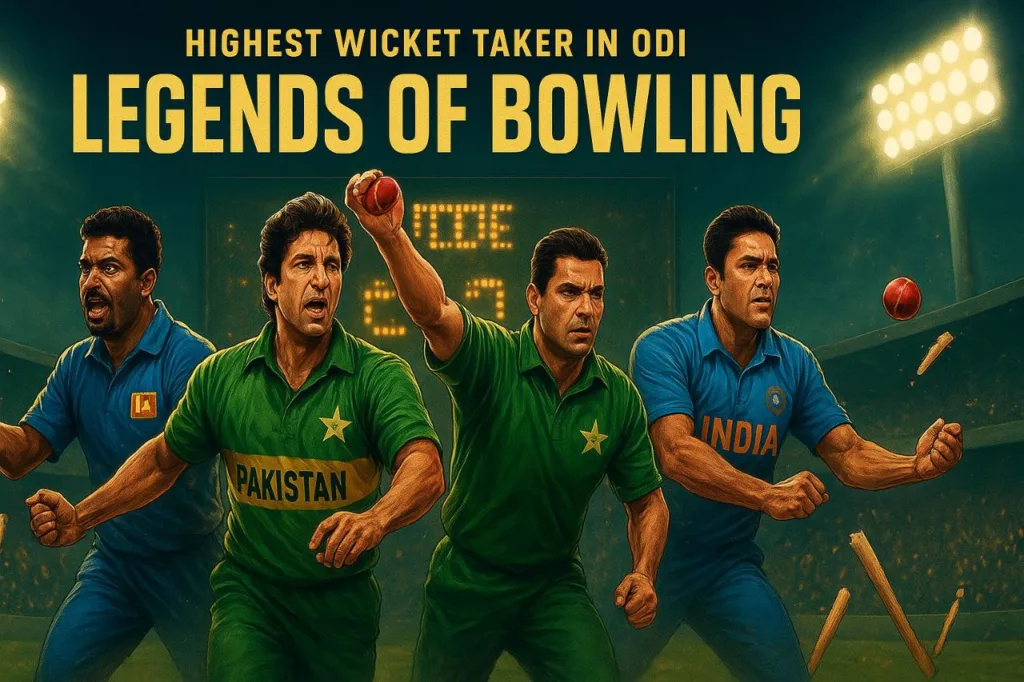
Highest Wicket Taker in ODI Cricket: Legends, Records & India’s Top Bowlers Imagine the roar of the crowd when a bowler sends the stumps cartwheeling in a tense ODI match. That moment isn’t just about one wicket—it’s about the skill, planning, and patience built over years of hard work. In the 50-over format, where batters are free to attack and fielding restrictions make life harder for bowlers, picking up wickets consistently is a true art. From devastating yorkers to unplayable spin, the highest wicket taker in ODI history represents more than just numbers—they are symbols of cricketing greatness. The Highest Wicket Taker in ODI – A Global Icon When it comes to ODI bowling dominance, Muttiah Muralitharan of Sri Lanka stands at the summit. The legendary off-spinner claimed 534 wickets in his 350-match career. His precision, variations, and ability to outthink batters made him a nightmare opponent on any surface. Before Murali’s reign, Pakistan’s Wasim Akram held the record, ending with 502 wickets from 356 matches. Akram’s mastery of swing—both conventional and reverse—helped him win countless matches for Pakistan and cemented his place as one of the greatest left-arm bowlers in cricket history. These two giants are the only bowlers to have crossed the 500-wicket mark in ODIs, setting a benchmark that might stand for decades. Top 10 Bowlers with the Most Wickets in ODI History Most Wickets in ODI for India – Legends in Blue India has always been known for producing great batters, but over the years, several bowlers have carved their legacy in the ODI format. Leading the way is Anil Kumble, India’s spin wizard, with 337 wickets in 271 matches. His relentless accuracy and ability to bowl long, economical spells made him a vital asset for over a decade. Right behind Kumble is Javagal Srinath, India’s premier pace bowler of the 1990s and early 2000s, with 315 wickets. His outswingers, combined with raw pace, troubled even the best batters of his era. Most Wickets in ODI for India These bowlers not only brought individual glory but also played crucial roles in some of India’s most memorable ODI wins. What Makes These Bowlers Special? While every bowler on these lists had unique strengths, a few common traits stand out: Consistency Over Years – Playing over 200 matches means staying fit, effective, and mentally strong across multiple seasons. Adaptability to Conditions – Waqar and Akram mastered swing in all conditions, while Murali and Kumble thrived both at home and abroad. Match-Winning Ability – Many of these bowlers delivered their best performances in high-pressure games, often in ICC tournaments. Variety in Arsenal – Yorkers, bouncers, slower balls, doosras, carrom balls—each bowler had something unpredictable to keep batters guessing. Fun Facts & Unique Records Chaminda Vaas’s 8/19 against Zimbabwe in 2001 remains the best bowling figures in ODI history. Shahid Afridi is the only player in the top 10 wicket-takers who was also known for explosive batting. Anil Kumble’s 6/12 against the West Indies is still one of the most destructive ODI spells by an Indian. Lasith Malinga is the only bowler to take four wickets in four consecutive balls in an ODI. Future Contenders Breaking into the all-time top 10 list is becoming harder in the modern ODI era, where bowlers play fewer matches. However, players like Mohammed Shami and Jasprit Bumrah have shown that skill and accuracy can still bring success. Shami, with his wicket-taking knack, could climb into India’s top 5 ODI wicket-takers soon. Bumrah’s injury interruptions may slow him down, but his strike rate is among the best in the world. Conclusion – Will These Records Ever Fall? The highest wicket taker in ODI cricket, Muttiah Muralitharan, set a standard of excellence that might never be matched. The most wickets in ODI list is a who’s who of cricket legends, each leaving an indelible mark on the game. For India, Anil Kumble’s record as the most wickets in ODI for India stands tall as a testament to skill, perseverance, and adaptability. But cricket is a game of surprises. Records that seem unbreakable today might fall tomorrow to a new generation of bowlers hungry for glory. The question is—who will be the one to do it?
Most Wickets in T20 Cricket (2025) – Tim Southee Leads, Rashid & Shakib Follow
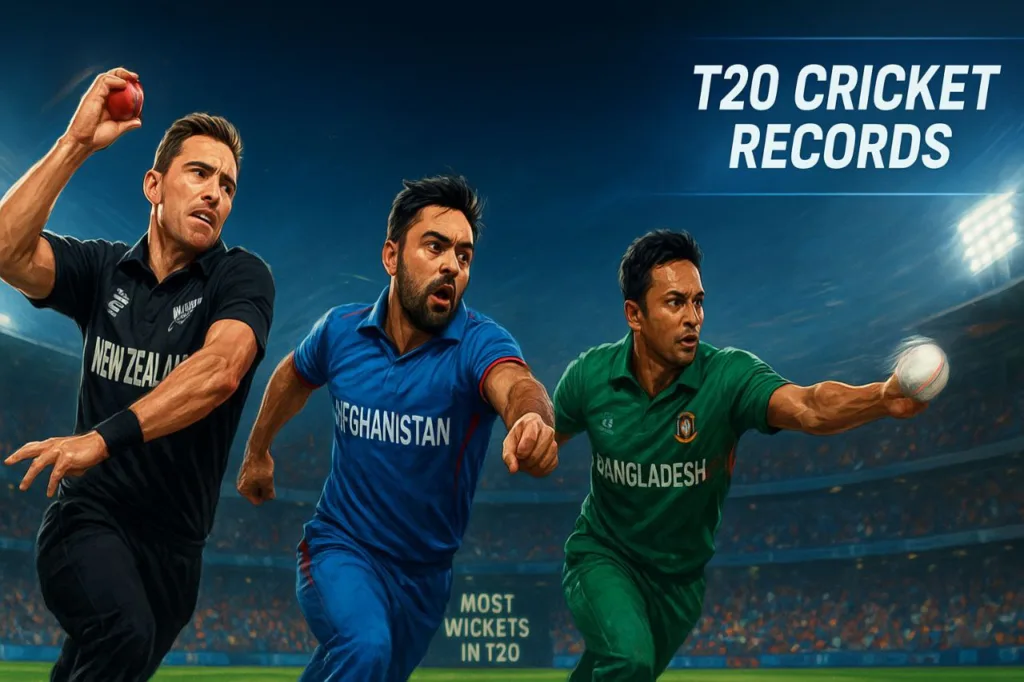
Most Wickets in T20 Cricket (2025) – Tim Southee Leads, Rashid & Shakib Follow In the ever-evolving world of cricket, where batters dominate headlines with explosive sixes and sky-high strike rates, it’s the bowlers who silently shape the destiny of T20 matches. The format may be built for entertainment, but behind every electrifying contest lies the craft of bowlers who can outthink and outfox batters within a limited window. Taking wickets in T20 cricket is not just about pace or spin; it’s about control, courage, and calculated aggression. From stadiums buzzing with energy to last-over thrillers, the role of bowlers in this format has become more crucial than ever among those who have stood tall in this high-pressure environment. A few names shine brighter—legends who have not only taken the most wickets in T20 but redefined what it means to bowl in the shortest format. Most Wickets in T20 Internationals (All Time) This table showcases the top wicket-takers in T20 International history as of August 2025. These bowlers have consistently delivered match-winning performances, proving their skill in one of the most challenging formats of the game. Tim Southee: King of T20 Wickets As of August 2025, Tim Southee of New Zealand holds the record for the most wickets in T20 Internationals, with a staggering 164 wickets in 126 matches. The right-arm swing bowler has mastered the art of new ball bowling and has also developed a deadly knack for picking wickets in the death overs. What sets Southee apart is his adaptability and intelligence—he reads batters and situations with a seasoned mind. Whether it’s seaming conditions in Wellington or flat tracks in the subcontinent, Southee has delivered consistently. Despite being a swing bowler in a power-hitting era, his economy rate remains under control, and his ability to take wickets upfront makes him an asset for any T20 side. Rashid Khan: The Spin Wizard Who Conquered T20S Right behind Southee stands Afghanistan’s spin sensation, Rashid Khan, with 161 wickets in 96 matches. With a bowling style that combines lightning-quick leg breaks and googlies, Rashid became a nightmare for even the most seasoned batters. At just 26 years of age, he has already become a modern-day great in T20 cricket. Rashid’s ability to bowl during the powerplay, middle overs, or even the death makes him extraordinarily versatile. His economy rate hovers under 6.5, one of the best for a frontline bowler. He has not only dominated in international cricket but also T20 leagues around the globe—from the IPL to the Big Bash. Shakib Al Hasan: The Greatest T20 All-Rounder Bangladesh’s Shakib Al Hasan isn’t just another name in the record books—he’s an institution in himself. With over 149 T20I wickets and 2400+ runs, Shakib is arguably the greatest all-rounder in T20 history. His left-arm orthodox spin and ability to score vital runs under pressure make him a rare double threat. His calm demeanour and ability to perform on big occasions are trademarks of his greatness. Whether it’s stalling the opposition with miserly bowling or accelerating during a chase, Shakib has done it all. Few players have matched his consistency across all phases of the game. Most Wickets in T20 for India Among Indian bowlers, Arshdeep Singh leads the pack with 99 wickets in 63 matches, closely followed by Yuzvendra Chahal, known for his swing and control. India’s bowling in T20S has evolved from pure pace to a balanced mix of spin and speed. Arshdeep Singh’s left-arm spin has been a game-changer, especially in the early overs, while Bumrah, though not topping the wicket charts, has maintained phenomenal control and struck at crucial moments. Other rising stars, such as Ravi Bishnoi and Kuldeep Yadav, continue to shine in the T20 circuit. Legends Who Set the Standard Before the current generation rewrote the record books, a group of cricketing legends laid the foundation for greatness in T20S: Lasith Malinga: The original T20 death-over king, known for his toe-crushing yorkers. His 107 T20I wickets were once the benchmark. Brett Lee: Raw pace and aggression. Though not a T20I leader in wickets, Lee’s impact was undeniable in early T20 games. Shane Warne: While more known for Tests, Warne’s IPL stint with Rajasthan Royals showed how spin could dominate even T20 formats. Shoaib Akhtar: The Rawalpindi Express didn’t play many T20Is but inspired a generation with his fiery spells and unmatched charisma. These legends may not top the charts in T20 wickets, but their influence on the modern bowling style is indelible. Conclusion The race for the most wickets in T20 is more than a numbers game—it reflects evolution, adaptation, and excellence in cricket’s most dynamic format. From Tim Southee’s surgical precision to Rashid Khan’s wizardry and Shakib Al Hasan’s unmatched versatility, bowlers have proven time and again that they can be match-winners even in a batter-dominated era. As T20 cricket continues to evolve, new heroes will rise, records will break, but the legends who paved the way will always be remembered. So, as fans, we must ask—who will be the next bowler to etch their name in the T20 record books?
Women’s Big Bash League 2020: Points Table, Results & Top Performers
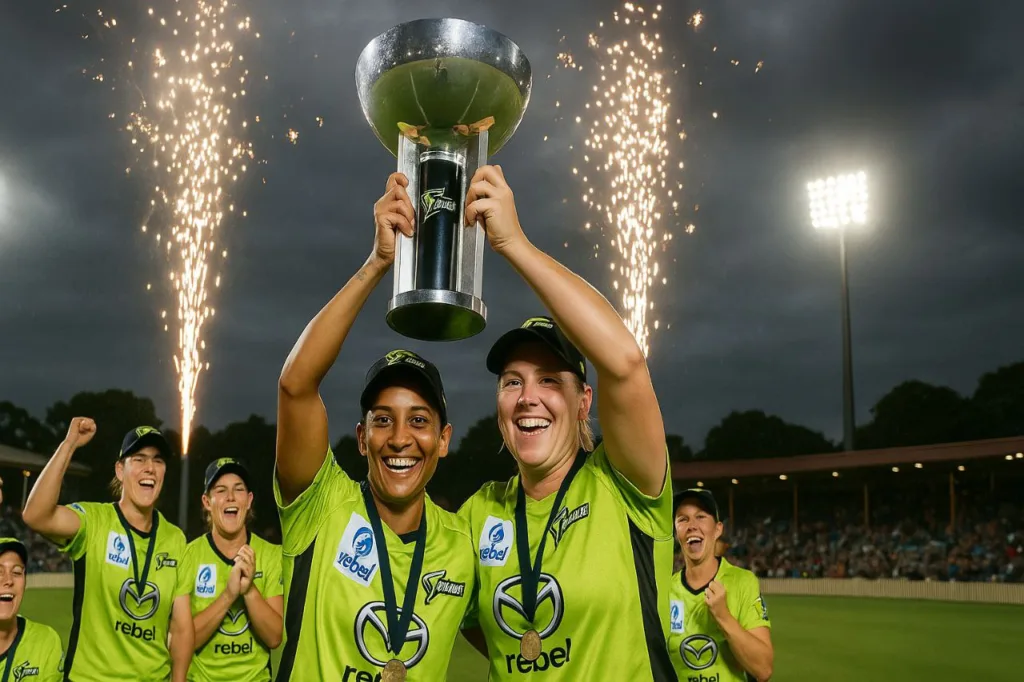
Women’s Big Bash League 2020 Points Table, Results & Top Performers The year 2020 was unlike any other. As the world stood still during the pandemic, sports had to adapt. Among the most resilient competitions to push through was the Women’s Big Bash League 2020. The sixth edition of the WBBL was played inside a bio-secure Sydney bubble — no roaring crowds, no cross-country travel — just raw cricket. But even without the fans, the players gave it their all. Rain washed out several fixtures, the pitches were unpredictable, but what emerged was a season where teamwork, strategy, and mental strength ruled. And at the centre of it all stood the Sydney Thunder — young, fearless, and eventually the champions. Format Changes, Shorter Timeline, Same Intensity Held entirely in New South Wales due to COVID-19 restrictions, the Big Bash League Women’s 2020 was a compressed version, running from 25 October to 28 November 2020. Despite the shortened format, it didn’t lack drama. Out of the 59 scheduled matches, 15 were affected by rain, testing not just players’ skills but their patience. Sydney Thunder’s Stunning Upset and Road to Victory Sydney Thunder, led by Rachael Haynes, were underdogs coming into the season. With a squad full of youth and only a few veterans, expectations were modest. But from the opening games, their bowling attack, especially Shabnim Ismail and Sammy-Jo Johnson, dominated. Their semifinal performance against the Brisbane Heat stunned everyone — the Heat were on a 7-match winning streak and the defending champions, but the Thunder choked them with disciplined bowling and tactical field placements. Then came the final. WBBL 2020 Final: A Collapse and a Clinical Chase In the final on 28 November 2020, played at North Sydney Oval, Sydney Thunder defeated Melbourne Stars by 7 wickets. The Stars had a horror show with the bat, managing only 86 runs in 20 overs, with Thunder chasing it down in just 13.4 overs. Ismail bowled with fire, taking 2 for 12, and was named Player of the Final. Melbourne Stars, led by Meg Lanning, had been the best team in the league stage, finishing at the top of the Women’s Big Bash League 2020 points table, but the pressure of the final overwhelmed them. Player of the Final Match In the WBBL 2020 Final, Shabnim Ismail was named Player of the Final for her electric bowling performance. She dismantled the Melbourne Stars’ top order with pace and precision, returning with figures of 2/12 in 4 overs. Her fiery opening spell set the tone as the Stars collapsed for just 86 runs. Ismail’s ability to swing the new ball at high speed rattled the opposition and showcased her world-class skill on the big stage. Her energy, control, and aggression lifted Sydney Thunder in the most crucial game of the tournament, sealing her match-winning impact in the title clash. Women’s Big Bash League 2020 Points Table Top Run Scorer of WBBL 2020 Beth Mooney topped the run charts in the Women’s Big Bash League 2020, scoring 551 runs in 14 matches for Perth Scorchers. Her calm presence at the crease and ability to anchor innings made her a consistent threat to every bowling attack. Mooney played crucial knocks under pressure, adapting well to different pitch conditions inside the Sydney bio-bubble. Her strike rotation, sharp boundaries, and experience in the T20 format were unmatched throughout the tournament. Even though Perth didn’t reach the final, Mooney’s performance stood tall and reaffirmed her status as one of the best batters in women’s cricket globally. Top Wicket Taker of WBBL 2020 Sammy-Jo Johnson of Sydney Thunder emerged as the leading wicket-taker of WBBL 2020, claiming 22 wickets in 14 matches. Her pace, bounce, and aggressive length deliveries constantly troubled batters. Johnson’s knack for early breakthroughs and controlling the middle overs gave Thunder a distinct edge throughout the tournament. Her best came during clutch moments — including powerplay scalps in must-win games and consistent pressure even on batting-friendly tracks. Alongside Shabnim Ismail, she formed one of the most feared bowling duos in the league and was a driving force behind Sydney Thunder’s championship-winning campaign. Player of the Tournament Sophie Devine, captain of the Perth Scorchers, was awarded the Player of the Tournament in WBBL 2020. Despite not reaching the final, Devine consistently delivered with both bat and ball, scoring 460 runs and taking 9 wickets. Her fearless batting style, explosive stroke play, and leadership qualities inspired the Scorchers to the semi-finals. Devine’s all-round impact made her a match-winner on multiple occasions. She led from the front and remained a fan favourite for her charisma and intensity. Her ability to change games in a matter of overs made her the standout performer of the entire season. Rain-Interrupted Fixtures and Their Impact on Results The Women’s Big Bash League 2020 results showed how rain dictated momentum. Even though 15 matches ended in no results or with DLS-based outcomes, teams adapted. Backup plans were needed every day, but coaches and players found ways to compete fiercely. Even under limited conditions, the season featured super overs, last-ball thrillers, and breathtaking catches. Rising Talents and Expanding Viewership Off the field, the WBBL 2020 also saw a major leap in visibility and broadcasting. All matches were televised or streamed — a first for the women’s tournament — showing a strong commitment to growing women’s cricket. Broadcasters like Channel 7 and Fox Cricket gave equal screen time, and Cricket Australia pushed digital coverage aggressively. Fans responded with record streaming numbers, even without being in the stands. Rising stars like Hannah Darlington, Phoebe Litchfield, and Tahlia McGrath used this exposure to launch themselves into national conversations. Their fearless style and confidence against experienced internationals added much-needed spark to the league. Conclusion: What Comes Next? In conclusion, the Women’s Big Bash League 2020 wasn’t just another season — it was a testament to resilience, adaptability, and belief in the face of global uncertainty. Sydney Thunder’s triumph, the rise of young guns, and the growing fanbase all